Latest

Terrific New Review of “Songs for the New Depression”: Out in Print Queer Book Review

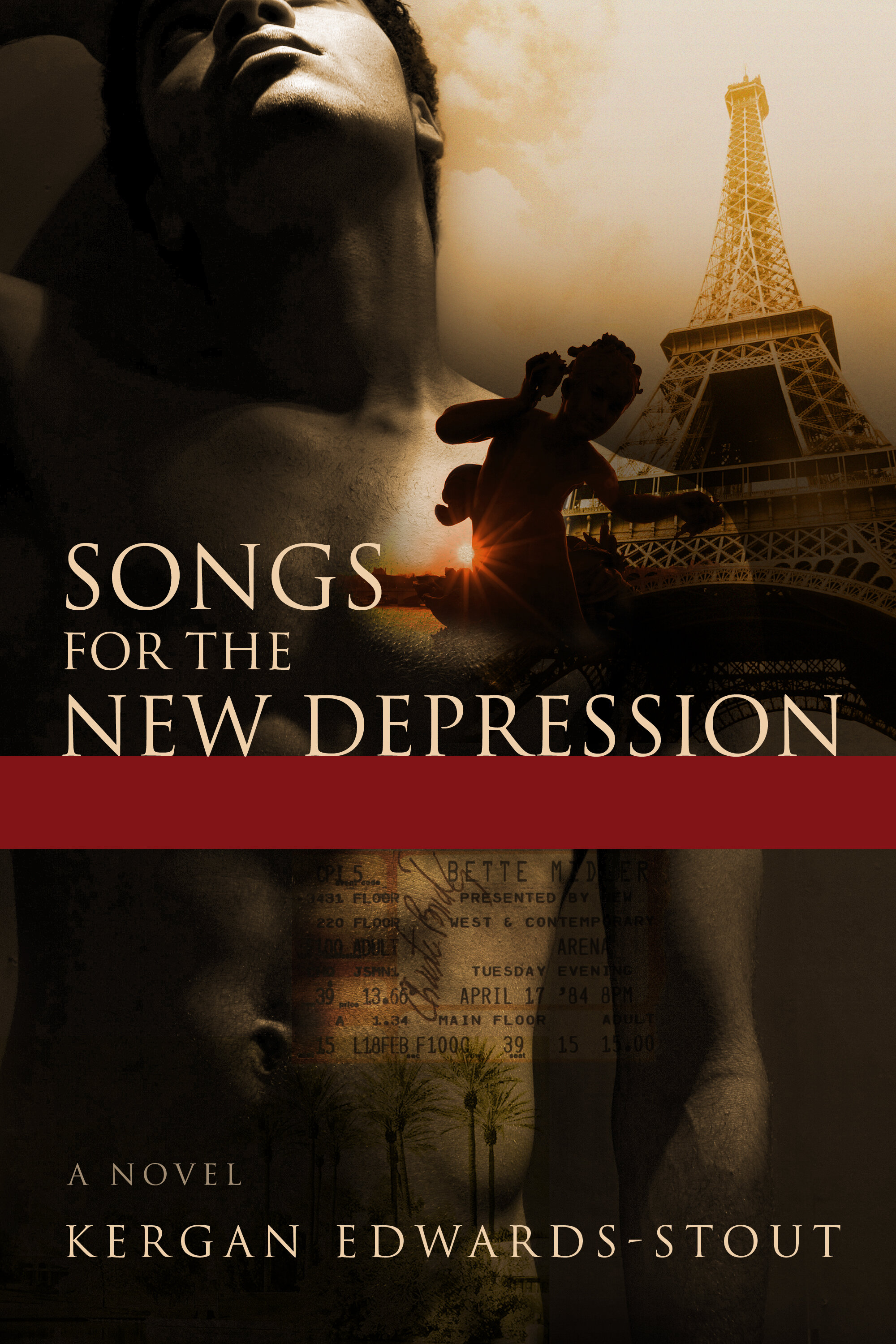
I’m so appreciative when a review ‘gets’ my novel.  The lead character isn’t easy to like, so when a reviewer or reader understands his tale and embraces it, as Out in Print has done, it means the world to me.

Songs for the New Depression Review by Out in Print Queer Book Review

Buy it now.

I don’t have to like the narrator of a novel to be engaged with it. Empathy certainly helps, but it isn’t necessary. I can think of many wonderful books narrated by extremely dislikeable characters—one of my all-time favorites, A Confederacy of Dunces by John Kennedy Toole, being the obvious front-runner. Gabriel Travers, the protagonist of Songs for the New Depression is no Ignatius J. Reilly, but he’s a despicable character telling a marvelous story.

Gabe, a caustic, suspicious, mistrustful cynic, is dying of AIDS, cared for by his boyfriend, Jon—who is the only person Gabe is unable to alienate. He has nothing but scorn for his parents, Lenny and Gloria, his best girlfriend Clare and the many tricks he has encountered. In every exchange that calls for compassion or at least civility, Gabe manages to be sour, mean and utterly unlikeable—which is what makes Songs for the New Depression so damn fascinating.

The book is structured in a reverse linear fashion, each of its three sections mirroring a song from Bette Midler’s third album, “Songs for the New Depression.” It begins with Gabe in 1995 (the song is “Shiver Me Timbers”), suffering from AIDS and trying to have a marvelous European vacation with Jon as he tires and eventually gives out. The second part of the book takes us to 1986 (the song is “Samedi et Vendredi”), Gabe in his twenties—trying on and discarding faces and friends as he seeks to find his place in the gay scheme of things. The third part takes place in 1976 (the song is “Let Me Just Follow Behind”), and Gabe is in high school, recovering from an abusive incident alluded to in the previous sections but explored in depth here.

This reverse structure is brilliant. Layers of the adult Gabe are peeled back, but rather than revealing the root cause of his cynicism—as common sense would dictate the author do—Edwards-Stout instead reveals that Gabe has always been like this and was, in fact, worse when he was younger, for no apparent reason. Sometimes he gets close to being human, but he always ends up saying the bitter thing rather than the right thing.

But the bitter thing is, many times, the telling thing. The trenchant observation. The unutterable truth that no one else dare speak because its very blasphemy underlies a fundamental veracity. In this, Gabe is fearless—refusing to sugarcoat or varnish his words to spare anyone’s feelings. It is his largest gift and his biggest fault.

Full of wit, wisdom and woe, Songs for the New Depression is an ugly yet irresistible piece of fiction. Buy it for someone you hate.

Reviewed by Jerry Wheeler

“Songs for the New Depression” Wins 2012 Indie Book Award!

My sincere thanks to the judges at the 2012 Indie Book Awards for selecting my novel, Songs for the New Depression, as the winner in the LGBTQ category. I am extremely honored and grateful.  This book has been a labor of love, crafted over a great many years, and I’m pleased that it has resonated with so many.  As an author, it is an odd thing to send your child out into the world, and sometimes hear nothing.  It is the wonderful notes, reviews, and awards such as this that tell me that, for many, my tale rings true.  I am touched and honored.  Thank you!

Of Mother’s Day and Misogyny

As a gay man, I’ve long been accustomed to being called names, and have developed, as a result, a rather thick skin; perhaps too thick.  Negativity tends to roll right off my back, as if my body were slathered in Vaseline, or–in my case–AstroGlide Sexual Lubricant.  Typically, I am able to greet each and every volley with a shrug, but a recent event occurred which I’ve yet been able to shake.  Someone insinuated that I hate women, and while I’d never remotely thought that to be the case, given the many terrific relationships I value, as we approach Mother’s Day, I ironically find myself pondering how I feel about the opposite sex.

To give a brief introduction to the incident, I recently released my debut novel, Songs for the New Depression, and have been happy to see it receive positive reviews from such varied sources as The Advocate, Midwest Book Review, and Kirkus Reviews, who tout themselves as “The World’s Toughest Book Critics,” just to name a few.  Today, it was even named the winner of the 2012 Indie Book Awards in the LGBTQ category, and was shortlisted in the same category for the Independent Literary Awards as well.

Given this acclaim, I was a bit disheartened to read my first negative review, which–of course–I’d fully anticipated.  I’ve long known that you can’t please everyone, and understand that not all readers will appreciate a book about a funny but cynical man facing death, trying to make amends to those he has wronged.  After all, the character has more than his share of gallows humor, and his tale of love, longing, and redemption may not resonate with everyone.  Still, it was not the reviewer’s issues with the story which gave me pause; it was that her main objection to the book seemed to be that it was, in her words, “dripping with misogyny.”  She further noted, in the comment section of her post, that “it is hard not to see the author behind the scenes choosing to write it.”  And that, in the end, is what really pissed me off.

To be clear, the character of Gabriel Travers is indeed misogynistic.  He is hateful, petty, and spiteful, even on the best of days, and a good deal of that venom is spit towards women.  But the reviewer missed the more important point, in that Gabriel hates everyone and acts similarly towards others, yet always reserves the harshest criticism for himself. He strikes out to prevent others from getting too close, only to wonder why his friends hold themselves at arm’s length. Like so many of us, he wants to grow and better himself, but hasn’t a clue as to how to do so.

Aside from this overarching character trait, what the reviewer failed to note is that the women in the book–each and every one–are working to better themselves. Gabriel’s mother makes great strides in learning how to love, another woman ultimately rejects Gabriel due to his negative nature, and a third offers him redemption, when he most needs it. They are the true heroes and heroines of the story–which is part of why Gabriel is so angry with them.  These women are doing for themselves exactly what Gabriel himself hasn’t yet been able. It is one thing to want to change; it is another to know how, and to have the tools necessary for such growth.

Far from being blessed with a nurturing and warm Leave It to Beaver maternal figure, my own mother was more like the character Mary Tyler Moore played in Ordinary People–brittle, tightly-wound, with the possibility of explosion just around the corner.  My sister, dad, and I continually walked on egg shells, highly aware that even the smallest of missteps could easily break our fragile truce of peace.  Today, happily, my mother has grown and bettered herself, becoming, if not the mother I’d always wanted, at least a mother I can live with.  I’m appreciative of her efforts towards growth, and have tried to improve my own damaged self, with varying degrees of success.

While my mom may not have been the ideal image of maternal nurturing, thankfully, there have been other women who have more than met that need.  My eldest son, Mason, was born to a wonderful woman in Tennessee, who allowed me to be in the delivery room at his birth.  She realized that she wasn’t able to tend to his parental needs, and so entrusted him to my care.  Her generosity, warmth, and spirit carry on to this day, through our continued contact.

Our youngest, Marcus, had a more difficult and challenging relationship with his mother.  When he was 6 months-old, his birth mom took him to a crack house, which was then raided, and he was placed into foster care.  Though they attempted to reconnect the two, given her inability to leave drugs behind, it proved impossible.  Still, I’m grateful to her for the gift she gave us: an amazingly resilient and loving son.

For me, my assessment of people has not been based on gender, but on deed.  And, thankfully, my list of the phenomenal includes many women, particularly our dear friends Deb and Mary Kay, who became the first legally church-wed lesbian couple in Orange County, CA; Karen, who works tirelessly in the jail system, helping to wean inmates off addictive behavior; and darling Lisa, who continually offers me  smiles, encouragement, and words of good cheer.

While this is, by necessity, a short list, my admiration for women extends far past the few mentioned.  I came of age during the AIDS epidemic, and will forever pay tribute to those brave women who stepped into vacant leadership and caregiver roles, whose many accomplishments are now largely forgotten.  But simply listing the women whom I admire is a bit akin to the old “some of my best friends are ___” argument.  The bigger question is, what makes someone a misogynist, and am I one?

When I contemplate the word “misogyny,” I think of anger, hatred, and dislike, which doesn’t remotely correspond with my feelings.  And when I think of “women,” no negative connotations arise, either.  Still, if a friend were to call me out for perceived misogyny, I would no doubt listen, for I have found that I become a better person from examining my failings.

With a creative work, however, linking artist to art can be tenuous at best.  In my novel, each and every word Gabriel utters, whether towards women or men, was carefully chosen for effect; sometimes for humor, sometimes for pathos, and other times to offend.  It is his nature to live life unfiltered, but for me, I long ago learned the perils of such behavior, and work rigorously to examine my insecurities and feelings in an ongoing attempt to better myself.

While I’m not convinced that I am, indeed, misogynistic, I’m leaving the door open to that possibility, for the best way I can think of to demonstrate my respect for women is to live authentically, treat others honorably, with my eyes open to opportunities in which I can improve myself, those around me, and the greater world at large.

Happy Mother’s Day.

Cross-posted on Huffington Post and Bilerico Project.

Gay Writers Give Birth to a “Child of the 70’s”

For any of us who came of age during the 1970’s, the era was a pop smorgasbord of fashion, art, culture, and music.  From the iconic John Travolta in Saturday Night Fever, to the music of ABBA, to classic TV series such as All in the Family, Mary Tyler Moore, and Carol Burnett, such references have not only helped define my generation, but have inspired in others an ongoing love for all things 70’s.

Actor/singer Michael Vaccaro is attempting to capture that spirit in a new web series, Child of the 70’s, which is currently fundraising at Indiegogo.  An indie actor in such movies as Todd Verow’s Deleted Scenes and The Endless Possibility of Sky, Michael also won a MAC award for Outstanding Musical Comedy Performer, and has recorded two CDs, Archangel and Wait for Him.

To create Child of the 70’s, he has joined with friend and collaborator, Terrence Moss, as co-writers.   Terrence is an independent writer based in Los Angeles who operates a website for longform content at www.terrencemoss.com, consisting of articles, commentaries, reaction pieces, essays, actor/actress profiles, and an ongoing short fiction series.

The two recently met to discuss this shared love of the 70’s, and how it helped inspire their new series.

Kergan Edwards-Stout: Michael, what is it about the 1970’s which entices you?  Is it the music? The TV shows?  Something more?

Michael Vaccaro:  All of those–and more.  It was a magical era. Look at TV alone.  It was the best TV ever! I mean, Mary Tyler Moore, Bob Newhart, Cloris Leachman, Valerie Harper, Carol Burnett, Bea Arthur, and Esther Rolle–and so many more. Back then, TV was interesting, smart and funny –and unafraid, just like the people who were coming of age then.

Edwards-Stout:  That was your time, huh?

Vaccaro:  Yeah, I was young and really cute, and I could get into clubs and drink and have sex with hot bartenders! You could dance and go home with strangers, and everybody was doing it and no one cared or judged. It was before we all started dying, and I remember such a sense of freedom and abandon.

Edwards-Stout: So you associate it with freedom…

Vaccaro:  Exactly.  There was a sense of achieving whatever dream you had.  Take cinema–also the greatest decade. Actors and directors and writers were unafraid, fearless, raw. It’s all pretty much sucked since. And music? No can tell me there’s a greater album, an album that better captured the feelings of an entire generation of people, than Saturday Night Fever.

Edwards-Stout: With your new web series, Child of the 70’s, you’re hoping to capture some of that?

Vaccaro:  I wanted to do something really fun, that brought back many of the actors that I loved from that time. I’m casting a few of my absolute favorites, though I can’t talk about who just yet.  So many, deserving of attention.  Look at the amazing resurgence of Betty White! I want to do that for a few of the people who helped make my childhood happy! Read the rest of this page »

Gay Jesus: From His Lips to God’s Ears

Terrence McNally’s play Corpus Christi has been captivating audiences and drawing detractors ever since its debut, 14 years ago.  By resetting the familiar tale of the life of Jesus in the town of his youth, Corpus Christi, Texas, McNally created a work which meditates on the life, love, and passion of Christ, but in a modern and relatable way.

I first met actor James Brandon, who for six years has been playing the character of Jesus (renamed Joshua in the play), when he and Nic Arzen, the play’s director, met with my pastor and I about the possibility of bringing their show to Church of the Foothills, our progressive church in the middle of conservative Orange County, California.

In addition to touring, the play has been the inspiration for a documentary as well, Corpus Christi: Playing with Redemption, which is showing at San Francisco’s Castro Theatre on Sunday April 29, with performances of the play itself occurring over that weekend.

James took time to speak with me about his life, love, faith, and his experience of playing a “Gay Jesus.”

Kergan Edwards-Stout:  I’ll never forget, walking up to unlock the sanctuary on the day of your first performance at our church, and finding a can on the front steps, labeled “Spray Away the Gay”–which turns out to be remarkably like Glade air freshener.  Who knew it was so easy, right?–Or that you’d even want to?!?  But you and your entire team deal with things like that all the time.

James Brandon:  I just recently found a picture of you holding that can!  But, yes, we deal with that all the time.  There is no choice except to embrace one’s inner happiness.  Some people think, just like that spray, it’s as easy as just saying “I’m not gay anymore” and being gay simply disappears.  I always say that it’s as easy as wiping the color of your skin off your face.

Edwards-Stout:  We also had a bomb threat.  How, as actors, do you calm yourselves and be fully present, with all that tumult?  Because the play doesn’t work if you aren’t… Read the rest of this page »

Book Pleasures Interviews Kergan Edwards-Stout

I enjoyed being interviewed by Joseph Valentinetti at Book Pleasures recently, as he asked a lot of fun questions most people don’t.  Check out the interview on the Book Pleasures site, or see below for a taste!

Joseph: Here’s some fun questions to start. At least they’re fun for me. What is the most overrated virtue?

Kergan: Chastity. But I’m not telling my kids that.

Joseph: What is the one thing other people always seem to get wrong about you?

Kergan: Until the publication of my novel, I’m not sure anyone thought there was as much going on in my head as there actually is. Most folks just saw me as a “gay dad.”

Joseph:  If you could change one thing about the world what would it be?

Kergan:  I would erase the divide between the have and have not’s.

Joseph:  What pet peeve do you have about other people?

Kergan:  Wastefulness. Whether it is food, water, resources, or–for writers–words.

Joseph:  Is there any occasion when it’s OK to lie?

Kergan:  The trite answer is to say that it is alright to lie to avoid hurting someone’s feelings. But, as I grow older and–hopefully–wiser, I’m not entirely sure even that is justified.

Joseph:  Tell us your philosophy of writing?

Kergan:  Write from the heart and let the words flow.

Joseph:  Is your writing an art or craft or some combination of both?

Kergan:  I think of writing as an art, which is more passionate and emotional. Too often, writers treat it more as craft, making sure every syllable is perfectly placed, but–to me–that kind of perfectionism usually robs the writing of its soul.

Joseph:  If you could go back ten years and give yourself one piece of advice what would that advice be?

Kergan:  “It doesn’t get any better. Life is harder than you think it will be. The trick is to find the joy, even amongst the rubble.”

Joseph:  What’s the name and genre of you book?

Kergan:  My debut novel is entitled Songs for the New Depression, though it is neither a song, nor inordinately depressing. It is a work of literary fiction, along the lines of a Michael Cunningham book, but mixed with the humor of Augusten Burroughs.

Joseph:  Who is the audience for this book?

Kergan:  I believe the book is for everyone, as the themes of love, longing, sex, and redemption are very universal. But if you ask my publisher, the primary audience is the LGBT community and straight women, as the themes seem to resonate strongly for both audiences.

Joseph:  Describe your protagonist and describe the challenges the protagonist needs to overcome and the motivation for overcoming them.

Kergan:  Set prior to the HIV drugs we now have, Gabriel is a gay man facing death, and wondering how the choices he’s made have led him to this point. Blessed with beauty and a sharp wit, Gabe has–more often than not–used words as a weapon, to keep others from getting close. Now, he’s facing the ramifications of such behavior, scrambling to make amends to those he has wronged. In particular, to find peace, he needs to reconcile an incident which, while it occurred long ago, continues to haunt him.

Joseph:  Quote a passage from your book that you love and elaborate on the meaning of the passage .

Kergan:  “James Baldwin once wrote that Americans lack a sense of doom, yet here I stand.” Over 12 years ago, that line popped into my head. At the time, I didn’t know who was speaking it, its context, or where it would lead, but that one line is now the opening sentence of my novel.

Joseph:  What surprising things did you learn while writing this book?

Kergan:  I think, most surprisingly of all, I learned that I am actually a writer. When I was younger, I would’ve never imagined that this could have been a career option, but here I am!

Joseph:  How has your upbringing influenced you writing?

Kergan:  My upbringing and life experiences have helped define my voice as a writer, so that everything I write has a certain shared sensibility.

Joseph:  Where do you live and how does that influence your writing?

Kergan:  I live in Southern California, and I think that kind of “laid back” attitude influences my writing style. I don’t obsess over every notation. While at times poetic, my writing is much more of a dialogue with the reader, putting all of my characters thoughts onto the page. And I think that “accessibility” is definitely influenced by my location.

Joseph:  Do you prefer fermented or distilled?

Kergan:  I’m drinking chardonnay right now.

Joseph:  Thanks once again and good luck with your book.


Even in Failed “Worldwide LGBT Equality March,” a Grassroots Effort Finds Seeds of Success

The LGBT community would be nothing were it not for the many and varied grassroots efforts which have sprung up throughout our history, spurring us forward in the name of equality.  While our national organizations may serve a purpose in terms of presence and lobbying, in my view, most of the monumental changes have occurred as the result of groups outside the mainstream.  Whether it be Lt. Dan Choi and GetEqual helping to bring about an end to DADT, or ACT-UP in demanding resources and awareness during the AIDS epidemic, or the small but laser-like focus of the American Foundation for Equal Rights in working to bring marriage equality to California, these smaller groups have often been able to affect change where our national organizations can’t–or won’t.

I came of age during the days of Queer Nation and ACT-UP, and every rally, march, or benefit I’ve attended or organized has helped instill in me the belief that power, indeed, lies with the people.  Last  year’s Occupy movement further reinforced that conviction: on a local level, a band of committed individuals can move mountains.

Washington, D.C., April 21st, 2012

In February, I wrote about a planned “2012 Worldwide LGBT Civil Rights March”, slated for April 21.   The idea for the march had sprung from a facebook group called Let’s Reach 1 Million People Campaign, and the group’s founder and lead organizer, Joseph C. Knudson, asked if I would write an article about their efforts.  I agreed, but as I began to look more closely at the event, I realized that I couldn’t deliver the promotional piece they’d desired.  The article, What if They Threw a Worldwide LGBT Equality March, and No One Came?, noted my concerns around the planning associated with the effort, and questioned if the event was truly designed for success.

The article prompted a firestorm of protest in the comment sections on both Huffington Post and Bilerico Project, primarily from those organizing the event, and included accusations of inaccuracies, questions about my motives, personal attacks, and even resulted in a rant about me on Knudson’s blog.  And yet, despite each of their energetic volleys, the questions I raised were never fully answered by the event organizers.

Instead, I and others with questions were simply urged to read the group’s disclosure document, as if the answers to each of our varied questions could be found in that single document.  While some have speculated that this event was simply a promotional effort, designed to draw attention to a book Knudson had written, it was assured time and again that the Worldwide LGBT Equality March had no connection to his personal endeavors.  But where, you might ask, is the group’s disclosure document located? Not on their website, as one would expect.  Instead, a link redirects you to Knudson’s own site, where the document is posted beneath links to his book trailer, author page, and book press release.  A minor point, perhaps, but hardly the kind of thing which eases concerns about either his motivation or the separation between the two endeavors.

Read the rest of this page »

Steven Fales: A Gay Mormon Boy Grows Up

Actor/playwright Steven Fales first came to my attention with his groundbreaking solo play, Confessions of a Mormon Boy, which was a hit off-Broadway and in cities around the world.  The play chronicles Fales’ heartbreaking journey from being a devoted sixth-generation Mormon and father of two, to coming out as gay and being excommunicated from his church.  Along the way, he also details his painful divorce, a long-fought battle with drugs and alcohol, a stint in prostitution, to finally coming out the other side as an out and proud gay dad.

Intrigued by his story, I asked him to perform his play at Church of the Foothills, the progressive church I attend in the middle of conservative Orange County, California.  Getting to know Steven and his life story, it became clear that no one play could accurately communicate his entire life’s journey, so I wasn’t surprised to learn of his creation of two new solo plays, Missionary Position and Prodigal Dad, which complement his first.

Missionary Position was based on Fales’ journals and follows his Mormon mission to Portugal, while Prodigal Dad explores the link between parent and child, and how tenuous, yet intrinsic, that bond can be.  My partner Russ and I had the pleasure of having Fales read us an early draft of Prodigal Dad in our living room, and I can’t wait to see it fully realized on stage.

For the first time ever, Fales will be performing these three plays in repertory at Los Angeles’ Hudson Guild Theatre, in preparation for an off-Broadway run.  He graciously took time to share with me more about these plays, his life, and his continuing journey as a gay father.

Kergan Edwards-Stout:  When you first wrote Confessions of a Mormon Boy, did you ever envision you’d eventually have a series of plays, all based on your life?

Steven Fales:  Heck no! I thought Confessions of a Mormon Boy was going to be it. But then life continued to unfold. And as I got more courageous in telling more and more of my truth, I knew I had to write the others.  Although Missionary Position has certainly become a big crowd pleaser, Prodigal Dad is where my heart and soul resides. Bottom-line, I’m a dad. And I was always meant to be a dad. My work honors all prodigal parents who have come home to who they really are.

Edwards-Stout:  What led you to write Confessions of Mormon Boy in the first place?

Fales: Well, at the time, I was being excommunicated in a formal church court for the practice of homosexuality.  After all of the reparative therapy I had undergone, and all the sacrifice and service to the church and my family, I found it all so fantastical and barbaric.  It was clear that someone needed to write this.

Edwards-Stout:  That person ended up being you–

Fales:  I mean, Mormons excommunicate you with a smile! But I also realized that I was afraid, if I were to suddenly die, my children would not know who their father was. If I didn’t tell my own story, no one else would.

Edwards-Stout:  But you have relationships, of varying degree, to very prominent Mormons who are also writers, correct?  Your mother-in-law, Carol Lynn Pearson, wrote Good-bye, I Love You, and your ex-wife, Emily Pearson, wrote Dancing with Crazy.  Both of them are memoirs about their personal experiences of marrying gay men, their faith, and other themes which connect with yours.  Were you concerned about how they would tell your story?

Fales:  No matter how great our divas are, they will never be able to tell our own stories with the honesty and passion that we can. I also didn’t want my story white-washed by women who seem to be pro-gay, but are actually pro-gay for pay. They have built an empire on gay Mormon memoir. And neither of them is gay…and barely even Mormon.

Read the rest of this page »

Review by Terri Schlichenmeyer: “Songs for the New Depression”

I so appreciate the terrific review of Songs for the New Depression by Terri Schlichenmeyer in her syndicated The Bookworm Sez column.

“If a roller-coaster ride of sadness and humor sounds right up your alley, then look for Songs for the New Depression by Kergan Edwards-Stout. This is the story of a man who knows he’s dying, knows he’s made a lot of mistakes in his life, and knows that he needs to fix things before the end. I won’t tell you the end. Read the book.” Terri Schlichenmeyer


Disqualified from High School Contest, Gay Teen Speaks Out

Kearian Giertz is the gay Fullerton, California, 17-year-old who made national news headlines last week, following his disqualification from a school contest for his statement supportive of marriage equality. During an annual rite of passage at his high school, known as the Mr. Fullerton Contest, Kearian was asked, in front of an audience, “Where do you see yourself in 10 years?,” and expressed his desire to find his life mate and be legally wed, only to find himself disqualified by a school administrator, who had his microphone cut off.  Upon hearing his story, several elements stood out to me as intriguing.  First, compared to my own angst-ridden life in high school almost 25 years ago, it was refreshing that this young man felt comfortable enough to proclaim his desire to wed another man.  Second, I was impressed by how quickly the high school responded to his disqualification, firmly supporting Giertz’ right to free speech and calling the administrator’s actions inappropriate.  Lastly, I was struck by how, upon being disqualified, instead of reacting with the expected anger and hostility,  the teen and his friends chose a more peaceful option, turning this disqualification into a teachable moment.

Having recently written my own letter to my high school bully, I was curious as to how today’s youth were coping with harassment on campus, as well as in their daily lives, and sat down with Giertz, fellow out-teen Blake Danford, and heterosexual, LGBT-supportive Katy Hall, all friends since 7th grade and now Fullerton Union High School seniors, to discuss what it is like to be out and gay in school, as well as the event which propelled them into the headlines.

Kergan Edwards-Stout:   First, let’s start with you, Blake.  When did you first realize you were gay?

Blake Danford:  I first realized I wasn’t really attracted to girls around 4th grade, but came out as gay in 8th grade to a girl in my English class, who was a lesbian.  Eventually, I told a few others, about 5 people total, but it wasn’t until my freshman year I began telling even more people.

Edwards-Stout: At what point did you tell your family?

Danford:  I came out to my mom in my sophomore year.

Edwards-Stout:  And she’s been supportive?

Danford:  Definitely.  I think it was actually harder for me, as I was expecting her not to be.  It was almost like, “Wait, are you really okay with this?” Her support almost seemed fake to me. My parents divorced when I was three, so I’m still not completely out to my dad’s side of the family, as we don’t see them.  Anything out of the norm is not okay with them.  I’ve had them tell me, directly, that if I ever “became” gay, they’d kill me on the spot.  And I assumed that was how everyone would be, so my mom’s support really threw me.  But I’m really glad her support was genuine.

Edwards-Stout:  Kearian, what about you? Did you always know you were gay?

Read the rest of this page »